


Handle Complex Scenarios Using Programmable Power Supply: AC/DC, Bidirectionality, Interfaces & Selection Guide


An alternative energy vehicle’s hybrid systems operate in complex sequences of electric-first driving operation while combined with intelligent engine use and regenerative break for recharging the battery during driving processes. And here is that twist: during the short driving haul of 10KM, the battery would have undergone transient charge and discharge status repetitively for tens of thousands of times, meanwhile that all of your PHEV’s components like infotainment, lights and indicators keep working unaffected.
What we would like to address here is how, during the seemingly simple yet highly complex operation of a PHEV on the road, all the components that make up the vehicle work together reliably to keep the entire system operating smoothly. Here comes to that topic we will cover in this article, which is all about the application of programmable power supply for validating electrical devices’ reliability.
What are Programmable Power Supplies?
A programmable power supply, does not exclusively refer to a power source whose current, voltage, and power, among with other miscellaneous electrical characteristics settings can be arbitrary and voluntarily configured and controlled by the users, but as well refer to sometimes an electronic load with similar functionalities. A programmable power supply can also be a source and load in the same unit.
A programmable power supply often comes with an HMI interface, alongside which there are buttons and knobs with which the user can adjust the unit’s output or electrical parameters. Nevertheless, the most distinct feature that sets a programmable power supply different from a pure source or load is the option of controlling it through a remote interface such as a host computer. Together with a certain control software installed, the user will be able to set up the power supply’s output automatically and programmatically.
Key Functionalities of Programmable Power Supplies
Although programmability is often regarded as the defining characteristic of a programmable power source and merits a dedicated, in-depth discussion, this chapter first steps back to examine the more fundamental and indispensable functions that such an instrument must inherently provide. More details about how programmable power supply conducts automated test sequences should be covered in later chapters.
Source a Certain Type of Power as per Requirement
Power testing instruments with programmable settings should be capable of, as the most basic essential function, sourcing as per required patterns and waveforms either alternating current (AC) or direct current (DC), or every so often a combination of them. Below are some primary types of programmable power:
- A DC programmable power supply is designed to source direct current (DC) that flows steadily in one direction through a circuit, meanwhile that the unit can emulate different waveforms.
- An AC programmable power supply similarly outputs alternative current (AC) voltages featuring periodically reverses direction. Most programmable AC power supplies can offer DC offsets for simulating DC noise, while the fundamental waveform of AC can either be single-phase or three-phase.
- Beyond these two common variants of programmable power supplies, certain complex testing scenarios require a hybrid power solution capable of both sourcing and sinking AC and DC power within a single, integrated unit.
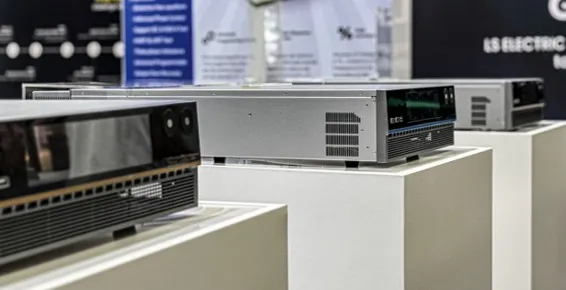 Fig 1. AC, DC and Hybrid Programmable Power Supplies by ActionPower
Key and primary operation modes: Constant Current, Voltage, and Power
As one of the most fundamental capabilities a programmable power supply is expected to provide, it must be able to deliver current, voltage, or power to a device under test (DUT) in a controlled and regulated manner, holding one parameter constant while allowing another to vary, so as to observe and verify the DUT’s electrical behaviour and response under defined operating conditions.
Constant Current (CC), Constant Voltage (CV), and Constant Power (CP) modes, as referred to for above applications, are implemented in programmable power supply through well-defined control loop architectures built on a common power stage.
- In CV mode, the control loop regulates the output voltage by continuously comparing the measured voltage with a reference value and adjusting the power stage accordingly.
- In CC mode, the feedback variable is the output current, allowing the supply to maintain a constant current while the voltage adapts to load conditions.
- CP mode is implemented as a higher-level composite control, where real-time voltage and current measurements are multiplied to calculate output power, and the resulting value is translated into a dynamic current or voltage reference that is enforced by an inner CC or CV loop.
From an engineering perspective, CC and CV loops typically operate in parallel with automatic priority selection, while CP relies on algorithmic control and stability management. This control-based implementation reflects industry-standard practices and aligns with the design principles used in professional test and measurement power supplies.
Precision and Responsiveness Matters: Resolutions, Accuracy, Precision, Response time
Testing and validation with programmable power instruments is all about uncompromised precision and accuracy. Any slight discrepancy between the configured setpoints and the actual output delivered to the DUT, or even any inadequacy in the accuracy of those setpoints themselves as against the digit shown on the interface, is fundamentally unacceptable.
A programmable power supply’s so-called and vague definition is precision is defined by the following parameters, as you would have noticed when studying a model’s specifications.
- Resolution refers to the smallest incremental change in voltage, current, or power that a programmable power supply can set, measure, or display. It defines the granularity of control and observation, and is primarily determined by the digital control architecture, such as DAC/ADC bit depth. High resolution enables fine parameter adjustment, but it does not, by itself, guarantee correctness or measurement quality.
- Accuracy describes how closely the actual output or measured value of a power supply corresponds to the true or specified value. It represents the absolute correctness of the instrument and is typically expressed as a combination of percentage-of-reading and percentage-of-range terms, for example, ±(0.01%+0.05% F.S.), where F.S. refers to full scale. Accuracy is influenced by calibration, temperature drift, and long-term stability, and it directly determines whether test results are valid and standards-compliant.
- Precision characterizes the repeatability and consistency of a power supply when the same setting is applied multiple times. High precision indicates low noise and stable control behaviour, enabling reliable repeatability and trend analysis, even if the absolute accuracy is limited.
 Fig 2. A programmable power supply reaching 6.5 Digit as measured by multimeter implies high level of accuracy and resolution
Advanced operation features: Auto-Ranging, Quadrants Coverage and Bidirectionality
Some advanced programmable power supplies can operate, within their rated maximum power limit, at arbitrary combinations of voltage and current that comply with Ohm’s law, provided that the product of voltage and current does not exceed the specified power rating. Such a function is referred to as auto-ranging, which is preferable for testing scenarios where a wide range of both current and voltage is required within a given fixed power limit.
 Fig 3. Auto-ranging’s coverage of region and boundary as delineated in I-V curve
To visualize the concept by explaining in the I–V plane, auto-ranging is characterized by a smooth, envelope-shaped operating region bounded by the maximum voltage, maximum current, and constant power limits of the power supply. Instead of a rigid rectangular V–I boundary, the usable operating area expands and contracts dynamically, allowing higher current at lower voltage and higher voltage at lower current, while transitioning continuously through a constant-power contour.
You may have also noticed that the region and boundary standing for auto-ranging covers not only quadrant-I yet also until the quadrant-II. This observation naturally leads to the concepts of quadrants, bidirectionality, and four-quadrant operation.
In a single-quadrant system, voltage and current are constrained to one polarity and power flows only from the source to the load. By contrast, a bidirectional or four-quadrant power supply is capable of operating across all four quadrants, sourcing and sinking current at both positive and negative voltages. For more complex testing scenario applications, such a function implies the instrument’s capability of working and transitioning between source and load modes, brining about considerable benefits and conveniences for testing DUTs, for example, batteries, converters and motor drives, which essentially consume and produce power during operation.
 Fig 4. Bidirectionality allows a programmable power supply to work in both source and load modes
Multiple Channel Outputs, Stackability and Upscalability
Handling testing scenarios with a single-channel power supply, not necessarily being referred to as a conventional one since there are also advanced high-power megawatt programmable systems which stand for cutting-edge technologies, sometimes suggests implementing multiple units of them when more than one sets of DUT is required to be validated at a time.
Multi-channel programmable power supply, by contrast, saves overall system cost and footprint allowing testing multiple DUTs delivering power to each of them from separately each of its integrated channels, although each channel typically has stricter limits on maximum voltage and power.
 Fig 5. Multi-channel programmable power supply tests multiple DUTs from one unit
Beyond channel count, stackability further extends system capability: multiple power supplies can be connected in series to increase output voltage, or in parallel to boost current. This modular approach enables flexible upscaling of voltage and power to meet evolving test requirements without replacing the entire power platform.
 Fig 6. DC programmable power supply in serial and parallel connection
What is referred to as the programmability of these power supplies’ functionality?
Implementing a programmable power supply is for all intents and purposes to facilitate and streamline testing and validation for either laboratory context or for production end-of-line, with automated sequencing and settings to save time and cost. The underlying significance is all about the automation. The below context will explain how automated testing is achieved through various programmable functions of such power supplies.
Built-in Programmability for Output Automation
Most of ActionPower’s programmable power supplies are developed with built-in interfaces as well as optional software for remote control from a host computer to instruct the unit to generate output and waveform following given automated sequences.
 Fig 7. ActionPower’s TITAN AC grid simulator has built-in interface for waveform generation following list programming
Advanced software integration: Vendor Software over Onboard Control and Sequencing
Sometimes the onboard and built-in programmability functions cannot meet your expectations against complex testing scenarios such as I-V curve emulation for PV inverter testing, or sophisticated grid condition emulation for validating IEC 61000 compliance. A more advanced option is to control the programmable power supply from a remote computer with vendor softwa which offers more powerful programming features and graphical user interfaces that facilitate testing automation and parameter setups.
 Fig 8. ActionPower’s remote software allows complex settings for I-V curve simulation
A programmable power supply is usually designed with various connectivity options for matching various standard interfaces when being connected to a computer and controlled by remote softwares there, some of the standard interfaces are:
- LAN (Ethernet): A network-based communication interface that enables instruments to be controlled and monitored over standard TCP/IP networks.
- RS-232: A serial point-to-point communication standard used for basic data exchange between instruments and a host controller.
- CAN-FD: An enhanced version of the Controller Area Network protocol that supports flexible data rates and larger data frames.
- GPIB (IEEE-488): A standardized parallel interface developed for communication between test instruments and a system controller.
Control by Coding: Programmatic Automation with Power Supply
Apart from those preset tools and interfaces within programmable testing instrument as well as remote computer occasionally used, the most powerful approach to controlling the unit with maximum level of arbitrary and voluntarily is by coding and programmatic control. By taking advantages of programming languages, engineers can setup to the most fine-tuned aspects and control the power supply’s behaviour, in a logic, structural and scalable manner.
Programmable power supplies typically support the following programming languages and control environments, either directly or through drivers and APIs:
- SCPI (Standard Commands for Programmable Instruments): A standardized ASCII command set used across most programmable power supplies and test instruments.
- Python: Commonly supported via VISA libraries or vendor SDKs for scripting, automation, and data processing.
- C / C++: Used for high-performance control, embedded integration, and custom ATE software development.
- C# / .NET: Widely used in Windows-based test systems and industrial automation platforms.
- LabVIEW (G language): A graphical programming environment frequently used in test and measurement applications.
- MATLAB: Used for algorithm-driven testing, modeling, and closed-loop control with instrument toolboxes.
- VBA / Excel: Occasionally supported for simple automation and data-driven test control.
- Java: Used in cross-platform test systems and enterprise-level automation frameworks.
In practice, most programmable power supplies expose a SCPI-over-interface model, and the actual programming language choice depends on the test system architecture rather than the power supply hardware itself.
In Which Industries Do Programmable Power Supplies Have their Place?
The presence of programmable power supplies is almost everything throughout industries as long as there are some regulations and standards imposed and against which manufacturers should have their products comply with the same to either ensure the safety of their users or for the verified system’s reliable operation. Applications of programmable power supplies are usually evolve with a certain industry which witnesses promising growth, below are some examples:
- New energy vehicles (NEVs): High-power, bidirectional, and regenerative programmable power supplies are required for testing traction batteries, inverters, onboard chargers, and electric drivetrains, the TITAN battery simulator power supply and BTS battery cycling system are designed for these tests. These supplies must support rapid voltage and current transitions to accurately emulate dynamic driving conditions and regenerative energy flow.
- Renewable energy and battery energy storage systems (BESS): Modular, scalable programmable power supplies, often at megawatt power levels, are used to test battery systems, PCS, and grid-connected inverters. Key requirements include four-quadrant operation, high-voltage capability, long-duration stability, and grid emulation functions.
- Semi-conductor devices and manufacturing: Precision programmable power supplies with high accuracy, fine resolution, and low noise are essential for semiconductor characterization, wafer testing, burn-in, and ATE environments. Fast programmability and high channel density are critical for achieving repeatable results and high test throughput.
- Aviation and aerospace: Programmable power supplies are used to validate avionics, aircraft electrical systems, and aerospace electronics operating under high-frequency and dynamic power conditions, ActionPower’s Cortex AC programmable power supply is usually used for these testing scenarios. These applications require highly reliable power supplies capable of delivering aviation-specific voltage and frequency levels, Such as 115/200 VAC at 400 Hz, 28 VDC, and 270 VDC, with fast transient response and the ability to accurately simulate abnormal and mission-critical operating scenarios.
 Fig 9. Megawatt Programmable Power Supplies by ActionPower
Find Out the Right Programmable Power Supply for Your Test Bench Setup
We appreciate your attention to this article, where we have presented a thorough introduction to the key features about programmable power supplies, and why are they essential for different testing applications thanks to their flexibility and programmability. ActionPower, ever since its foundation back in 1996, has been dedicated itself to the research and development of programmable power supplies and testing systems with constant effort attached to the engineering and innovation-driven mindset. Our expertise in power testing solutions are remarked by the following portfolios and solutions:
- Programmable AC power supplies and high-power regenerative grid simulator, with powerful specifications matching complex EVSE and grid-adaptability testing projects.
- High-power DC programmable power supplies, PV simulator and battery simulator power supplies, accommodating megawatt power testing scenarios
- Strong development and engineering capabilities to support your ATE system requirements thanks to our team of R+D engineers who comprise 52+% of our staff and with profound expertise in power electronics and from interdisciplinary backgrounds.


 목록으로
목록으로  댓글쓰기
댓글쓰기  0
0 


총 0건의 댓글이 있어요
댓글 0